





Imagine coming home after a long, tiring day. Your feet are aching, and all you want is a soothing foot massage. A foot massager seems like a godsend at times like these. But as tempting as it may be, there are situations where using a foot massager can do more harm than good. In this article, we’ll look in detail at when you should avoid such a massage. Because, as with many things in life, the same principle applies here: better safe than sorry.
Show table of contents
- Next article: Who should not use a foot massager? Main contraindications
- Next article: How long and how often should you use a foot massager?
- Next article: Best foot massager for neuropathy: what to look for
- Next article: EMS foot massager: benefits, side effects and is it safe?
- Next article: Foot massager benefits: do they work and who are they for?
- Next article: Are foot massagers healthy?
Summary/TLDR
Foot massagers are pleasant aids for relaxation. However, there are specific circumstances in which you should not use them, or only after speaking to a doctor, such as acute injuries, certain medical conditions or pregnancy. This article lists all the contraindications one by one, explains how long a session should last and suggests three alternatives if using the device is not an option.
When should you not use a foot massager?
Many people find a foot massager pleasant, but it isn’t suitable for everyone or in every situation. Here you’ll find out when it’s best to avoid using one.
In the case of acute injuries or pain
Injuries such as sprains and fractures
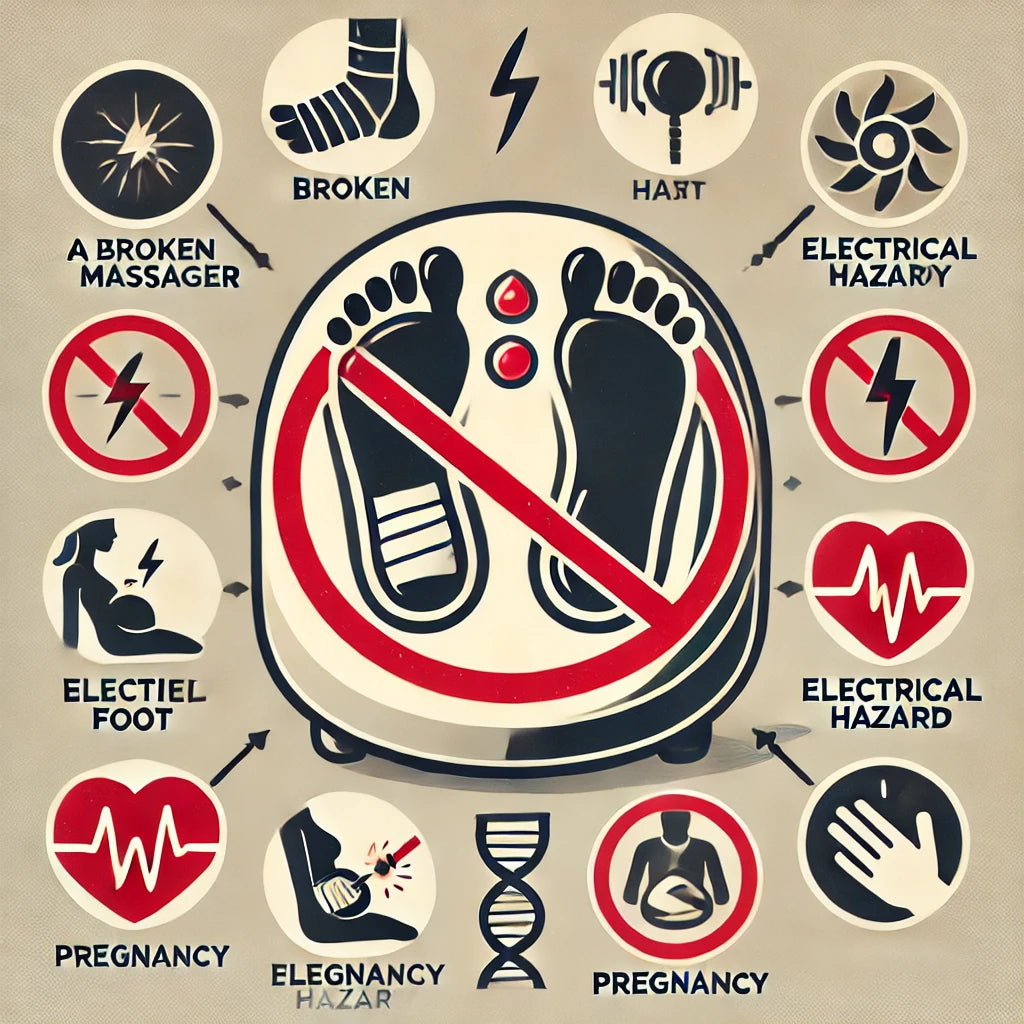
One of the most important rules when using a foot massager is not to use it in the event of acute injuries such as sprains or broken bones. Why? Well, a foot massager applies pressure to the feet, which can make such injuries worse. Imagine you’ve sprained your ankle. The extra pressure could not only cause pain but also slow your recovery.
Swelling and inflammation
The same applies to swelling or inflammation. In such cases, it is advisable to leave the affected area alone and, if necessary, seek medical advice. A foot massager could increase the swelling and slow your recovery.
In certain medical conditions
Diabetes and circulatory disorders
People with diabetes or circulatory disorders should be particularly careful. With these conditions, sensation in the feet may be impaired, meaning you might not realise if the massager is too strong or causing discomfort. Furthermore, minor injuries or pressure marks caused by the device could have serious consequences. If you have diabetes or polyneuropathy, keep the heat function switched off and check with your doctor before using the device: if you cannot feel heat reliably, you may notice a burn too late. The article Choosing a device for polyneuropathy and numbness explains what to look out for if you have impaired sensation.
Cardiovascular diseases
If you suffer from cardiovascular diseases, you should also take care. Using a foot massager can affect your blood pressure and heart rate, which may be risky in certain cases. It is best to speak to your doctor before using such a device.
During pregnancy
Why caution is advised
Pregnant women should be particularly careful. Some sources advise against applying firm pressure to certain points on the sole and ankle during pregnancy. There is no scientific evidence that this triggers labour. Even so, only use a foot massager during pregnancy after speaking to your doctor or midwife.
In the case of skin problems and infections
Fungal infections and open wounds
Foot massagers should not be used if you have skin problems such as fungal infections or open wounds on your feet. Using a device could worsen the infection or cause the wound to open further. There is also a risk that bacteria or fungi could enter the device and multiply there.
With electronic implants
Use with pacemakers
If you have a pacemaker, the manufacturer’s instructions for your foot massager apply. Check with your doctor before using it. Many manufacturers rule out use with a pacemaker in the instruction manual. EMS devices, which work with electrical impulses, are not an option if you have a pacemaker. The guide Massage and massage chairs with a pacemaker covers this in detail.
Important safety note: Read the safety instructions in your device’s manual before using it for the first time.
In cases of circulatory disorders and varicose veins
If you have peripheral arterial disease, do not use the device. The blood vessels are already narrowed. Additional pressure may further impede blood flow. The same applies to existing varicose veins: the massage may worsen the condition. In both cases, consult your doctor beforehand.
For inflammatory conditions
Arthritis and gout occur in flare-ups. During an acute phase, a massage can exacerbate the inflammation and pain. Wait until the flare-up has passed. Between flare-ups, gentle use is usually fine, but this should also be checked with a doctor first.
When is a foot massager a good choice?
After all these warnings, the question arises: when is a foot massager a good choice? If you do not have any of the conditions mentioned above, many people find a foot massager a pleasant way to unwind and refresh tired feet. One brand to look at in this area is NAIPO. Its devices are easy to use and offer gentle, adjustable settings that suit everyday use.
Safety in everyday use: electricity, duration, frequency
A foot massager is an electrical appliance. It must not be used near water, and a damaged cable must not be plugged into the socket. Check the cable and plug from time to time.
As for duration, more is not better. As a guideline, a session of 15 to 20 minutes is enough. If your device’s instruction manual gives a shorter time, follow the manual. Massaging for hours on end puts too much strain on the foot muscles. If your feet feel heavy or sore after use, you’ve had too much.
If using the device isn’t an option: three alternatives
Manual massage. You or someone else can feel where the pressure is becoming too strong. A device cannot detect this. For sensitive feet, this is the safer option.
A warm foot bath. Many people find the warmth pleasant, and there is no mechanical pressure. If you have diabetes or polyneuropathy, however, skip the warmth, including the foot bath: feet with impaired sensation often do not notice water that is too hot in time. Speak to your doctor first.
A gentler device. Some models use air pressure instead of kneading heads and can be finely adjusted. Even then, you should first check whether your health allows you to use it.
Conclusion
A foot massager can be a wonderful addition to your wellness routine, as long as you ensure it is used under the right conditions. Listen to your body and avoid using it if any of the risk factors mentioned apply to you. This way, you can ensure that you experience only the positive effects of the massage without causing yourself any unnecessary harm.
FAQ
1. Can I use a foot massager if I have diabetes?
It is advisable to be particularly careful if you have diabetes. Always discuss the use of a foot massager with your doctor and keep the heat function switched off.
2. Why shouldn’t I use a foot massager if I have swelling?
The mechanical pressure can further irritate swollen tissue and make the swelling worse. It is best to have the cause checked by a doctor.
3. Can I use a foot massager whilst pregnant?
Only after speaking to a doctor. Ask your doctor or midwife before using the device.
4. Is a foot massager safe to use if I have a cardiovascular condition?
People with cardiovascular conditions should only use a foot massager after consulting their doctor, as it can affect blood pressure and heart rate.
5. What should I do if my foot swells or hurts after the massage?
If your foot swells or hurts after using a foot massager, stop using it immediately and consult a doctor to determine the cause.
6. Can a foot massager make varicose veins worse?
This can happen. If you already have varicose veins, you should seek medical advice before using one.
7. How long should a session last?
As a guideline, 15 to 20 minutes; if the instruction manual gives less, follow the manual. Longer sessions are of no benefit and put excessive strain on the muscles.
8. Are there devices suitable for older people?
Yes. There are models with gentler intensity settings and simpler controls. Low pressure settings and an automatic shut-off function are important.
If you enjoy foot massages: in the massage chair overview, you’ll find models that massage your feet, legs and back in a single session.
If you want to compare models: the overview of all NAIPO foot massagers shows features and prices at a glance.
Related: How long can you use a foot massager? The guide Foot Massagers for Neuropathy explains what to look out for if you have nerve damage in the feet.
This article goes through the contraindications one by one. If you have an existing condition and want to choose a suitable device, the guide When are foot massagers not allowed? covers device choice and manufacturer guidance.
Frequently asked questions
- Who should not use a foot massager? Main contraindications
- How long and how often should you use a foot massager?
- Best foot massager for neuropathy: what to look for
- EMS foot massager: benefits, side effects and is it safe?
- Foot massager benefits: do they work and who are they for?
- Are foot massagers healthy?
 Who should not use a foot massager? Main contraindications
 How long and how often should you use a foot massager?
- Best foot massager for neuropathy: what to look for
 EMS foot massager: benefits, side effects and is it safe?
 Foot massager benefits: do they work and who are they for?
 Are foot massagers healthy?


Written by NAIPO Editorial Team · Massage & Product Experts from Hamburg
Product experts, service technicians, and massage enthusiasts at Alsterwell GmbH — specializing in massage technology for over a decade, with our own workshop and showrooms for test sitting.
NAIPO Editorial Team · Sources verified



Leave a comment
This site is protected by hCaptcha and the hCaptcha Privacy Policy and Terms of Service apply.